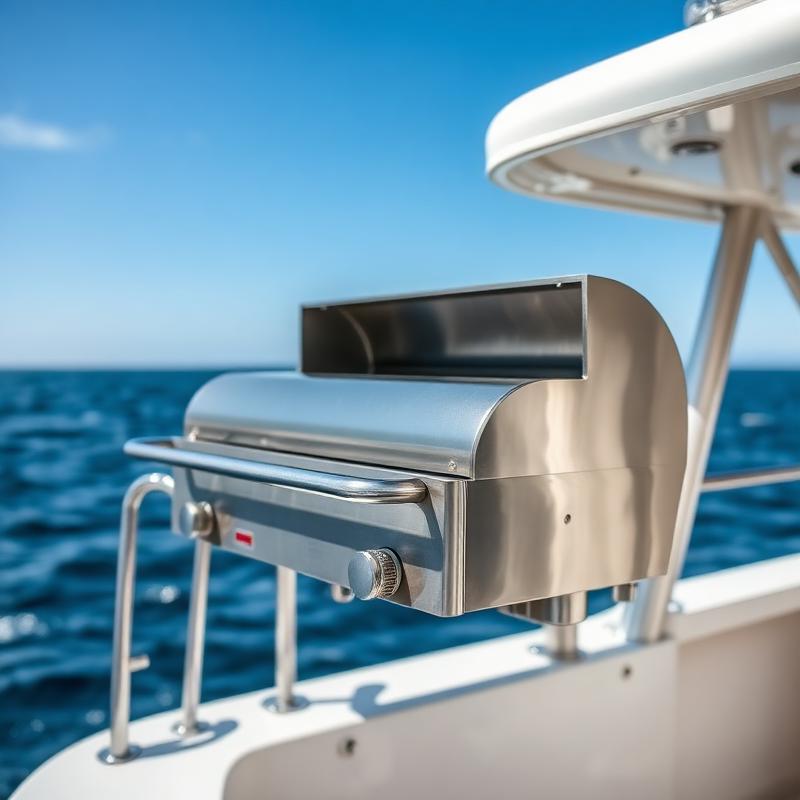
 #1 PickBest Boat Grill
Marine Gas Grill$469
Magma Marine Cabo Gas Grill
4.5/5
The definitive boat grill — 316 marine-grade stainless, rail-mountable, built to handle saltwater environments.
Marine & Boat Grills
Grilling on a boat is a different problem to grilling in a backyard. Salt air destroys ordinary steel, wind kills open burners, and anything not bolted down eventually goes over the side. Across manufacturer specs and owner reports from boats at anchor, at the dock and underway, the gap between a real marine grill and a repainted camping grill shows up fast. These are the ones worth mounting to your rail.
#1 PickBest Boat GrillThe definitive boat grill — 316 marine-grade stainless, rail-mountable, built to handle saltwater environments.
#2 PickBest Large Boat GrillThe big-boat grill — infrared burner, 162 sq in of 316 stainless, and enough output to feed a full cockpit without flare-ups.
#3 PickBest Value Marine GrillThe dock-and-deck crossover — Magma's marine build quality in a tabletop shape that works on a boat, a dock or a tailgate.
#4 PickBest Compact Boat GrillThe stow-anywhere boat grill — folds flat, weighs 14 lbs, and packs a thermometer and regulator most rivals charge extra for.
#5 PickBest Charcoal Boat GrillCharcoal flavour on the water — a hemispherical 316 stainless kettle with a hinged lid and a bottom that stays cool enough to mount.
#6 PickBest for CruisersThe bluewater cruiser's grill — heavy 316 stainless, plumbs into an onboard propane system, and shrugs off ocean passages.
316 stainless is the whole ball game. Marine-grade 316 contains molybdenum, which resists the chloride pitting that eats 304 and 430 stainless in salt air. If a listing just says 'stainless steel', assume it isn't 316 — and expect rust freckles by the end of your first saltwater season.
Budget for the mount separately. Rail mounts, rod-holder mounts and deck sockets are almost never included, and they run $60-120. Never improvise with hose clamps: a grill that shifts underway is a fire and a very expensive splash.
Infrared beats open flame in wind. An infrared plate heats a radiant surface instead of throwing a flame at your food, so apparent wind pulls far less heat away — and dripping fat vaporises instead of flaring up next to your dock lines.
Match the fuel to how you cruise. Disposable 1 lb canisters are fine for day boats. If you're cruising or living aboard, a grill that plumbs into the boat's low-pressure propane system saves money and locker space — but have the plumbing done properly, with the correct regulator and solenoid.
Charcoal on a boat only works with a captive lid. A hemispherical enclosed body contains embers, and a hinged lid can't blow overboard. Let coals die completely with the vents shut, then dump cold ash into a sealed metal container and dispose of it ashore.
Rinse with fresh water after every saltwater trip. Thirty seconds with a hose and a wipe-down of the grate is the difference between a grill that lasts ten years and one that looks tired after two — even on 316 stainless.