Last Updated
Cook on Deck, Prep in the Galley
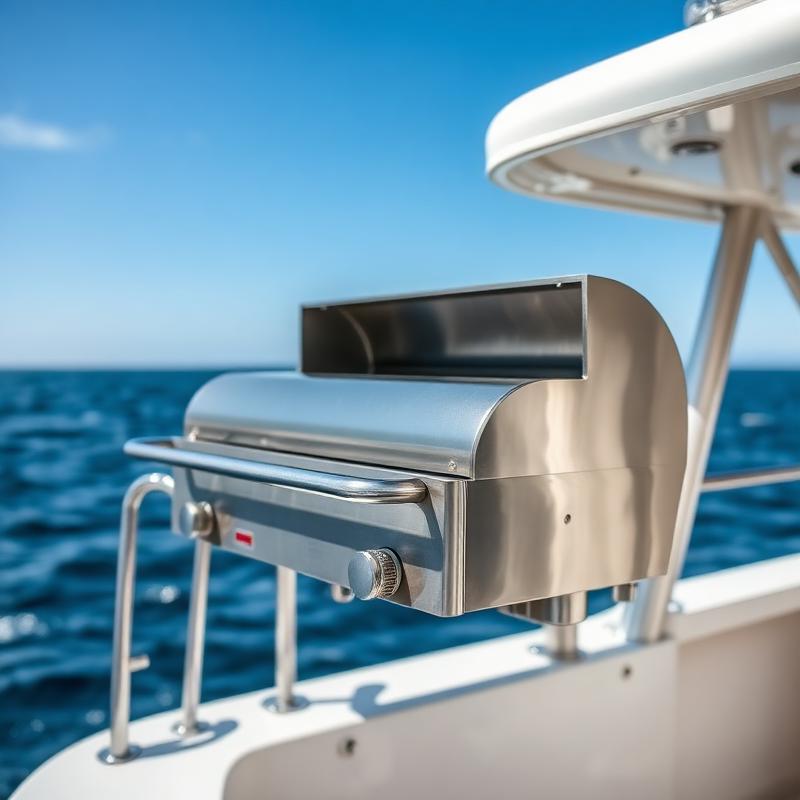
The best boat cooking system splits the work: everything that needs a knife, a bowl or a marinade happens in the galley or before you leave the dock; everything that needs heat happens on the grill on the rail.
The reason is heat and smell. A propane stove in a small cabin raises the temperature ten degrees and leaves the boat smelling of fried fish for two days. A rail grill puts all of that outside and over the water.
Practically, this means your galley becomes a prep and storage space and your grill becomes the cooktop. Plan menus around that split and boat cooking stops being a chore.
Provisioning: Plan by Cook, Not by Day
Count the number of hot meals you will actually cook, not the number of days aboard. On a three-day weekend most crews cook four hot meals — two dinners, one big breakfast, one lunch — and eat cold or snack the rest.
For each hot meal, pre-portion the protein into a vacuum bag or zip bag with its marinade already in it. Freeze the later meals solid; they act as ice in the cooler and thaw in order.
Day one should be the most perishable thing you brought — fresh fish, shellfish, ground meat. Day two and three go to vacuum-sealed steaks, chicken thighs and sausages, which hold well. Backup meal should be shelf-stable: canned beans, pasta, cured sausage. You will need it the day the weather turns.
Write the plan on a card and tape it inside a locker door. Nobody remembers the plan on day three.
Pro Tip: Marinate in the bag before you leave. It saves a bowl, saves fresh water for washing up, and the meat is better for the extra time.
Fuel Budgeting
A 1 lb propane canister runs a typical single-burner marine grill at full output for about 90 minutes. Wind and cold water cut that significantly — figure 60 minutes of usable cooking in real conditions.
A rough planning number: one canister per two hot meals for a small grill, one per meal if you are cooking for six or running an infrared plate that needs a long preheat.
Add one spare beyond your calculation. Running out mid-cook with raw chicken on the grate is a genuinely bad evening.
If your boat has a plumbed propane locker, a low-pressure adapter hose eliminates canister math entirely and costs far less per meal.
Cooking Fish You Just Caught
This is the whole point of a boat grill for most people, and it is where the most mistakes happen.
Bleed and ice immediately. Quality is decided in the first ten minutes, not on the grill. Bleed the fish, get it in an ice slurry, and fillet when you are back at anchor.
Oil the fish, not the grate. Oil on a hot grate burns off and turns to glue. Oil the fillet, and get the grate genuinely hot before the fish goes on — a hot grate releases, a warm one sticks.
Skin side down, and leave it alone. Most of the cook happens on the skin. Do not move the fillet until the flesh has gone opaque about two-thirds up the side. Then flip once, thirty to sixty seconds, done.
Firm fish direct, delicate fish on foil or a plank. Mahi, tuna, swordfish and salmon go straight on the grate. Flounder, snapper fillets and anything thin go on a foil sheet or a soaked cedar plank.
Whole fish is easier than fillets on a boat. Score the sides, stuff the cavity with lemon and herbs, and use a fish basket. It is far more forgiving of an unsteady grill.
See our detailed technique guide on [how to grill fish without sticking](/how-to/grill-fish-without-sticking).
Six Meals That Work on a Boat
1. Grilled fish tacos. Fillets, a bag of slaw, tortillas, a squeeze bottle of crema. Twelve minutes, one grate, no plates needed.
2. Sausage and pepper foil packs. Assembled at the dock, thrown on the grate, zero cleanup.
3. Steak and grilled corn. Vacuum-sealed steaks hold four days on ice. Corn cooks in the husk with no prep.
4. Grilled shrimp skewers. Metal skewers only. Three minutes a side. Buy the shrimp already peeled.
5. Breakfast on a cast iron plate. Bacon, eggs, and toasted English muffins on a griddle plate over the marine grill. The single best argument for owning a griddle plate.
6. Chicken thighs with a dry rub. Forgiving of temperature swings, cheap, and they do not dry out when the boat swings and you lose ten minutes. Our [grilled chicken thighs guide](/how-to/grill-chicken-thighs) applies exactly.
Safety and Etiquette on the Water
Never grill underway on a powerboat at speed. Apparent wind carries embers and the motion is unpredictable.
Keep a fire extinguisher within arm's reach of the grill, not in a locker on the other side of the cockpit.
Watch your dock lines and canvas. The most common boat grill damage is a scorched bimini or a melted fender line, not a burnt dinner.
Shut the propane off at the canister, not just at the grill knob, every single time.
Let the grill cool fully before covering or stowing. A hot grill in a locker has started more boat fires than an open flame on deck.
Grease and scraps go ashore. No exceptions in a mooring field.
Next: our [marine grill accessories guide](/guide/marine-grill-accessories-guide) covers the gear that makes all of this easier.
Ready to find your perfect grill?
Browse All Reviews →