Best UpgradeAccessory

Magma Marine Griddle Plate

Last Updated
First Published

Recently reviewedThis review was last reviewed on June 19, 2026.
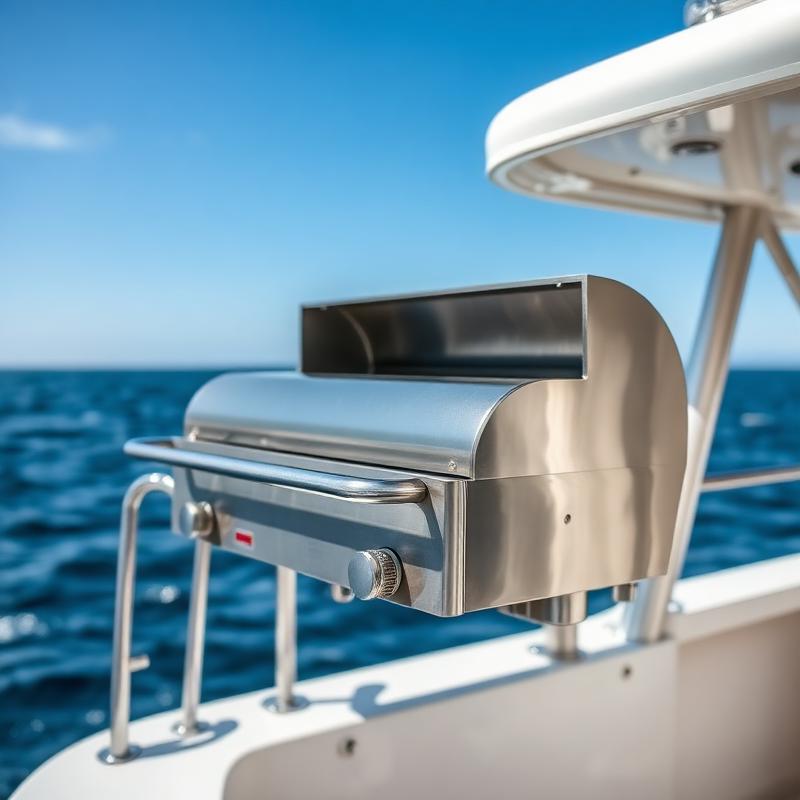
Magma Marine Griddle Plate accessory product photo

A single-burner marine grill does burgers and fillets and nothing else. A griddle plate turns the same grill into a flat-top, and that is where boat cooking actually gets good.

What We Love

  • +Cooks eggs, bacon and pancakes on a boat grill
  • +Stops shrimp, small fillets and vegetables falling through
  • +Even heat from a heavy plate smooths out burner hot spots
  • +Contains grease instead of dropping it on deck or in the water
  • +Nests inside the grill for storage
  • +Doubles the meals a small grill can handle

Watch Out For

  • $69 for a plate
  • Heavy — noticeable on a weight-conscious boat
  • Needs seasoning and care to stay non-stick
  • Longer preheat than an open grate
  • Model-specific sizing

Specifications

Material

Coated / cast plate, model-specific

Fits

Magma marine grill line

Use

Breakfast, seafood, vegetables

Storage

Nests in grill

Care

Scrape hot, wipe with oil

The Full Review

The argument for a griddle plate on a boat is breakfast. Bacon, eggs and toasted muffins on deck at anchor is the meal people remember from a trip, and it is impossible on an open grate.

The second argument is grease containment. On an open grate, fat drips through — onto the deck if you are mounted badly, into the water if you are mounted well. Neither is good. A plate catches it and you wipe it into a paper towel that goes ashore.

The third is small food. Shrimp, scallops, small fillets and sliced vegetables all fall through a standard grate, and on a moving boat you are not fishing them out.

Heat behaviour changes for the better. A single burner in a small firebox has a hot centre and cool edges; a heavy plate spreads that out considerably. The cost is preheat time — allow eight to ten minutes rather than four.

Care on a boat is the honest downside. Scrape it while it is hot, wipe a thin film of oil on, and cover it. Skip that routine on saltwater and you will be reseasoning it constantly.

Who Is It For?

Anyone who overnights aboard. Fishermen cooking small fillets. Families with kids who want pancakes at anchor.

Final Verdict

The single best upgrade to a small marine grill. $69 roughly doubles what your grill can cook, and breakfast at anchor is worth it on its own.

Check Price on Amazon

Common Questions

Frequently Asked Questions

Is the Magma Marine Griddle Plate worth the price?
The single best upgrade to a small marine grill. $69 roughly doubles what your grill can cook, and breakfast at anchor is worth it on its own. At $69, it earns its sticker — the build quality and feature set justify the cost for the right buyer.
Who is the Magma Marine Griddle Plate best for?
Anyone who overnights aboard. Fishermen cooking small fillets. Families with kids who want pancakes at anchor.
What are the biggest strengths of the Magma Marine Griddle Plate?
The standout strengths: Cooks eggs, bacon and pancakes on a boat grill; Stops shrimp, small fillets and vegetables falling through; Even heat from a heavy plate smooths out burner hot spots. Also worth noting: Contains grease instead of dropping it on deck or in the water.
What are the downsides of the Magma Marine Griddle Plate?
The honest trade-offs: $69 for a plate; Heavy — noticeable on a weight-conscious boat; Needs seasoning and care to stay non-stick. None are dealbreakers for most buyers, but worth knowing before you commit.
Where is the best place to buy the Magma Marine Griddle Plate?
Amazon typically has the most competitive price and fastest shipping for the Magma Marine Griddle Plate. Check the manufacturer's site for occasional direct sales, and big-box stores (Home Depot, Lowe's) if you want to inspect one in person before buying.

From around the web

More about accessorys

Are gas grills worth it?
For most backyard cooks, yes. Gas grills heat up in under 10 minutes, hold steady temperatures with a single knob, and require almost zero learning curve. You give up the smoky flavor and high-heat searing of charcoal, but gain weeknight convenience that gets you grilling 3x more often. If you cook 2+ times a week, a gas grill pays you back in time saved.
How many BTUs do I really need in a gas grill?
Most home cooks need 80-100 BTUs per square inch of cooking surface — not the highest-BTU grill you can find. Build quality, heat distribution, and lid insulation matter far more than raw BTU numbers. A well-built 32,000 BTU grill outperforms a flimsy 60,000 BTU one.
How long should a gas grill last?
A quality gas grill (Weber, Napoleon, Broil King) should last 10-15 years with basic maintenance: cover it, clean the grates, replace burners every 5-7 years. Cheap big-box grills typically rust through in 2-3 seasons.
Propane or natural gas — which is better?
Natural gas is cheaper per cook and never runs out mid-cook, but requires a gas line installed at the grill location. Propane is more flexible (move the grill anywhere) but costs more per BTU and you'll occasionally run out. If you grill in a fixed spot, natural gas wins long-term.