How to Calibrate Your Grill Thermometer
The thermometer that came with your grill is almost certainly inaccurate. Most built-in dome thermometers read 25-75°F off, which is the difference between perfect brisket and dried-out shoe leather. Here's how to test and calibrate yours.

Last Updated
Tools & Materials
- Boiling water
- Ice water
- Cup or bowl
- Adjustable wrench or pliers (for analog dials)
Step by Step
Boil water for the high test
Bring a pot of water to a rolling boil. At sea level, boiling water is 212°F. If you're at altitude, subtract roughly 2°F per 1,000 feet of elevation.
Insert your thermometer probe
Place the thermometer probe into the boiling water without touching the sides or bottom of the pot. Wait 30 seconds for the reading to stabilize. Note the temperature shown.
Test with ice water
Fill a cup with ice and add cold water. Stir for 30 seconds, then insert the probe. It should read 32°F. Note any deviation.
Calculate the offset
If your thermometer reads 220°F in boiling water, it's reading 8°F high. If it reads 28°F in ice water, it's reading 4°F low. Average the offsets to get your correction factor.
Adjust or compensate
Analog dial thermometers often have a calibration nut on the back — turn it with pliers to zero the reading. Digital probes may have a calibration function in their app. If neither option exists, simply remember your offset and adjust mentally.
Cross-check at grate level on a live fire
Verify a known-accurate instant-read in ice water first, then bring the grill to a stable temperature for 15 minutes and lay that reference at grate level next to the food. Compare it with the lid gauge — dome and grate readings routinely differ by 50-100°F, and grate level is the number your cook actually follows.
Consider upgrading
If your built-in thermometer is off by more than 15°F and can't be calibrated, install an aftermarket thermometer or use a leave-in digital probe like a ThermoWorks Smoke or MEATER. For serious cooking, a grate-level or dual-probe wireless thermometer removes the guesswork entirely.
Warnings
- Be careful with boiling water — steam burns are serious.
- Never trust a single thermometer. Verify with at least two devices for important cooks.
- Dome-mounted thermometers read air temperature at the top of the dome, which can be 25-50°F higher than grate level.
- Altitude changes the boiling point — at 5,000 feet water boils at about 202°F. Adjust your reference number before calling a thermometer inaccurate.
- Bi-metal dial thermometers drift over time. Re-check them every season.
How Often?
Check calibration at the start of every grilling season, and any time your results seem inconsistent.
Tools & Products You'll Need
ThermoWorks Thermapen ONE $105
The gold standard reference thermometer
ThermoWorks Smoke Dual-Channel $99
Permanent grate-level temperature monitoring
Common Questions
Frequently Asked Questions
How long does it take to calibrate your grill thermometer?
What tools do I need?
How often should I do this?
What safety issues should I watch for?
Keep Reading
You might also like
How to Fix Hot Spots and Uneven Heat on a Gas Grill
Map your grill's hot spots with the bread test, then fix the causes — clogged ports, warped heat plates, and blocked venturi tubes.
ReadHow to Fix Low Flame on a Gas Grill
The 5-minute regulator reset that fixes 90% of low-flame issues.
Read
Weber Kettle vs. Weber Smokey Mountain
Both are Weber legends. One is a versatile grill that can smoke; the other is a dedicated smoker that can't grill. Here's which one belongs in your backyard.
ReadPellet Grill vs. Gas Grill
Pellet grill vs gas grill, settled: flavor, speed, running cost, versatility, and the honest answer to which one belongs on your patio first.
Read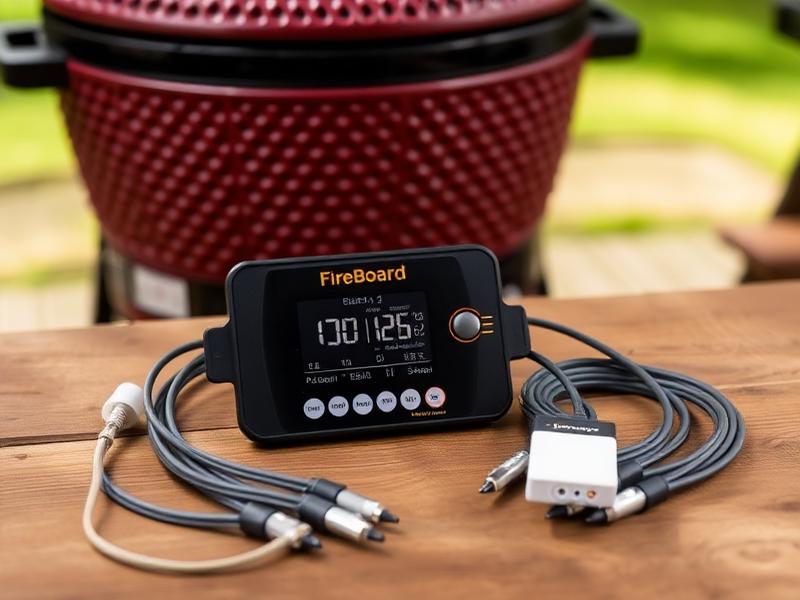
FireBoard 2 Drive
Smart thermometer with fan controller — automatically maintains your smoker temperature. The set-it-and-forget-it dream.
ReadHow to Fix a Gas Grill Igniter That Won't Click
Diagnose and repair the ignition system so you never need a match again.
Read