Last Updated
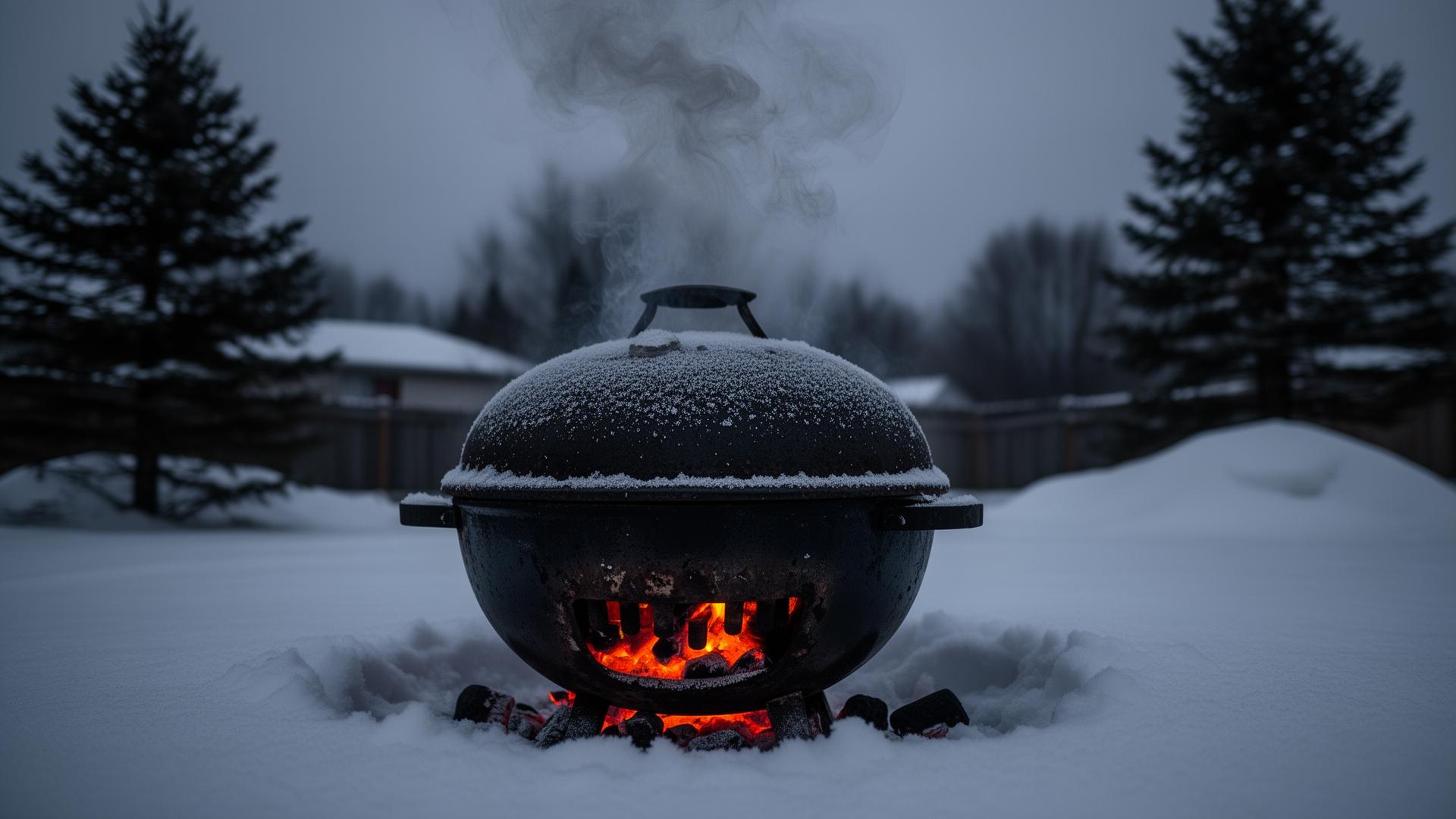
Why People Grill Outside When It's -10°F
In Sydney, 'cold' means putting on a hoodie. In Minnesota, a January cook at 12°F with light wind teaches three things fast: charcoal lights slower, lump burns hotter than briquettes when you need it to, and propane behaves like a moody teenager below 20°F.
Plenty of cooks run their grills year-round, including the days the school district cancels for cold. This playbook pulls together manufacturer guidance, owner-reported results and established cold-weather fire management into the advice a first-winter cook actually needs.
The Big Three: What Actually Changes Below Freezing
1) Fuel burn rate spikes. A pellet smoker that sips 1 lb/hour at 70°F can chew through 2.5 lb/hour at 0°F holding the same grate temp. Every BTU is fighting the cold steel of the cook chamber, the food, and a constant heat-leak through the gasket.
2) Propane regulators ice up. Liquid propane vaporizes by absorbing heat. In deep cold, the tank gets so cold the regulator can frost over and choke fuel flow. You'll see flames sputter, then die. Solution below.
3) Wind is your real enemy, not temperature. A still 5°F day is easier than a windy 25°F day. Wind strips heat off the lid, sucks coals to ash in 20 minutes, and makes any vent gap leak like a screen door.
Fire & Fuel Strategy That Works
Charcoal: Use lump for cooks under 90 minutes. It lights faster and runs hotter. For long burns (ribs, pork shoulder), switch to high-quality briquettes (Kingsford Pro or B&B Char-Logs) — they hold temp better when wind gusts every few minutes.
Pellets: Buy a premium hardwood pellet (Lumberjack, BBQrs Delight). Cheap pellets have more sawdust filler that burns fast and ash-clogs the firepot in cold weather. Vacuum the firepot before every winter cook — a 1/4 inch of ash is the difference between a clean burn and a smolder.
Propane: Always run from a freshly-filled cylinder. The fuller the cylinder, the more liquid surface area available to vaporize, and the better it copes with cold. If the regulator frosts over mid-cook, shut the burners off, close the cylinder valve and let the appliance rest until flow recovers, then relight following the manufacturer's lighting instructions. Per the Propane Education & Research Council (PERC) and grill manufacturers: never bring a cylinder indoors or into a garage, never warm a cylinder or regulator with a heat gun, hair dryer, open flame or hot water, and always store and use cylinders outdoors, upright, away from ignition sources. If frosting is persistent, have the cylinder and regulator checked by your propane supplier.
Insulation Hacks (Welding Blanket > Everything)
The single biggest upgrade for any grill in winter is a high-temp welding blanket. $25 on Amazon, rated to 1,800°F, drapes over the lid and cuts your fuel burn by 30-40% on a charcoal smoker. It also kills wind-driven temperature swings.
Do NOT use cheap fiberglass insulation, towels, or anything not rated for the temperatures involved. Welding blankets are designed for radiant heat exposure. Anything else is a fire that hasn't started yet.
For pellet smokers, look for a model-specific insulated cover (Traeger, Camp Chef, and Pit Boss all sell them). The DIY versions on Etsy are usually fine and half the price.
What I Actually Cook in Winter
Long cooks shine. Brisket, pork shoulder, beef ribs, chuck roasts — anything that benefits from 8+ hours of low-and-slow rewards you for staying inside while the smoker does the work. The cold actually helps maintain a thicker smoke ring because the meat surface stays cool longer.
Avoid: thin cuts, fish, anything that needs constant attention. The colder it is, the more punishing it is to flip burgers every 90 seconds. Save quick cooks for milder days or use a covered porch setup.
Wizard's Tip: Pre-heat the cook chamber 15 minutes longer than you think you need to. Cold steel is a heat sink that will tank your grate temp the moment you put the meat on.
Don't Do This
- • Never grill in a garage, even with the door open. CO buildup is fatal.
- • Never warm a propane cylinder or regulator with a heat gun, hair dryer, hot water or open flame — and never move a cylinder indoors or into a garage to thaw it.
- • Never use a snow shovel as a windbreak — galvanized coatings off-gas.
- • Never leave a hot grill unattended near a wood deck buried in snow that's hiding old grease drippings.
Cold-Weather Gear Worth Owning
Lincoln Electric 6' x 8' Welding Blanket $28
The single best winter grilling upgrade — cuts fuel burn 30-40% on any smoker.
ThermoWorks Smoke X4 $269
Wireless meat probes so you can monitor from inside while it's snowing.
Weber Premium Grill Cover $60
Fitted cover with proper venting prevents moisture rot under snow.
Artisan Griller Heat-Resistant Gloves $16
Long cuffs cover wrists when reaching past a frosty grill body.
The wind rule
If sustained wind is over 15 mph, position the grill so the prevailing wind hits the lid hinge — not the vents. You'll cut your fuel burn in half.