How to Control Temperature on a Charcoal Grill
Charcoal grills aren't harder than gas — they just have a different control system. Once you understand that the bottom vent controls the fire and the top vent controls the exhaust, you can hold any temperature you want for as long as you want. Here's the system that works on any kettle, kamado, or barrel smoker.
Last Updated
Tools & Materials
- Charcoal chimney starter
- Quality briquettes or lump charcoal
- Leave-in probe thermometer
- Heat-resistant gloves
Step by Step
Start with the right amount of fuel
For low-and-slow smoking (225-275°F): half a chimney of lit coals dumped onto a pile of unlit coals (the snake or minion method). For medium grilling (350-450°F): one full chimney. For high-heat searing (500-700°F): one and a half chimneys spread across two-thirds of the grate. Too much fuel is just as much a problem as too little.
Light coals in a chimney starter — never with lighter fluid
Fill the chimney with charcoal, stuff two sheets of newspaper in the bottom chamber, and light. In 15-20 minutes the top coals will be ashed over and ready. Lighter fluid leaves a chemical taste and is genuinely unnecessary. Chimney starters cost $18 and last forever.
Set up two zones, always
Even if you're only grilling burgers, push all the lit coals to one side of the grate and leave the other side empty. This gives you a direct (hot) zone and an indirect (cool) zone — essential for finishing thick cuts without burning them, and a safety zone for anything that flares up.
Open the bottom vent fully to start, then close to control temp
The bottom vent is your throttle — it feeds oxygen to the fire. Start fully open to get the grill up to temp quickly. Once you're 25°F below your target, start closing the bottom vent: half-closed for 350°F, quarter-open for 275°F, barely cracked for 225°F. Make changes in small increments and wait 10 minutes to see the effect.
Leave the top vent at least one-third open
The top vent controls exhaust. Closing it too far suffocates the fire and produces dirty white smoke that ruins flavor. Leave it at least one-third open for any cook. Many pitmasters leave the top vent fully open and adjust temperature only with the bottom vent — this works perfectly fine and prevents creosote buildup.
Use a leave-in probe at grate level
The dome thermometer on most kettles can be 50°F off from the actual cooking temperature at the grate. Clip a leave-in probe thermometer to the grate next to (not touching) the food. This is the only number that matters. ThermoWorks Smoke or Inkbird IBBQ-4T are the gold standard.
Adjust early, adjust small, then wait
Charcoal grills have thermal inertia — they take 10-15 minutes to respond to vent changes. If you're at 250°F and want to climb to 275°F, crack the bottom vent open another quarter-inch and wait. Don't make 3 changes in 5 minutes — you'll overshoot, then overcorrect, then chase your tail for an hour.
Warnings
- Never use lighter fluid — it's unsafe with hot coals and leaves chemical residue on food. A $18 chimney starter pays for itself.
- Don't close the top vent below one-third open. A suffocated fire produces creosote, which makes meat taste bitter and is genuinely unhealthy in large quantities.
- Hot coals stay dangerous for 24+ hours after the grill seems cool. Always dispose in a metal container — never in a paper bag or plastic bin.
- Heat-resistant gloves are mandatory for adjusting vents during a cook. The bottom vent gets hot enough to cause serious burns.
How Often?
Master this system on three or four cooks and you'll never struggle with charcoal again. The same vent logic applies whether you're grilling burgers or smoking a 14-hour brisket.
Common Questions
Frequently Asked Questions
How long does it take to control temperature on a charcoal grill?
What tools do I need?
How often should I do this?
What safety issues should I watch for?
Keep Reading
You might also like
Best Charcoal Grills
The Weber 22" Original Kettle Premium ($175) is the most-recommended grill in BBQ history for a reason — versatile, indestructible, and dirt-cheap. If you want cast aluminum that n
Read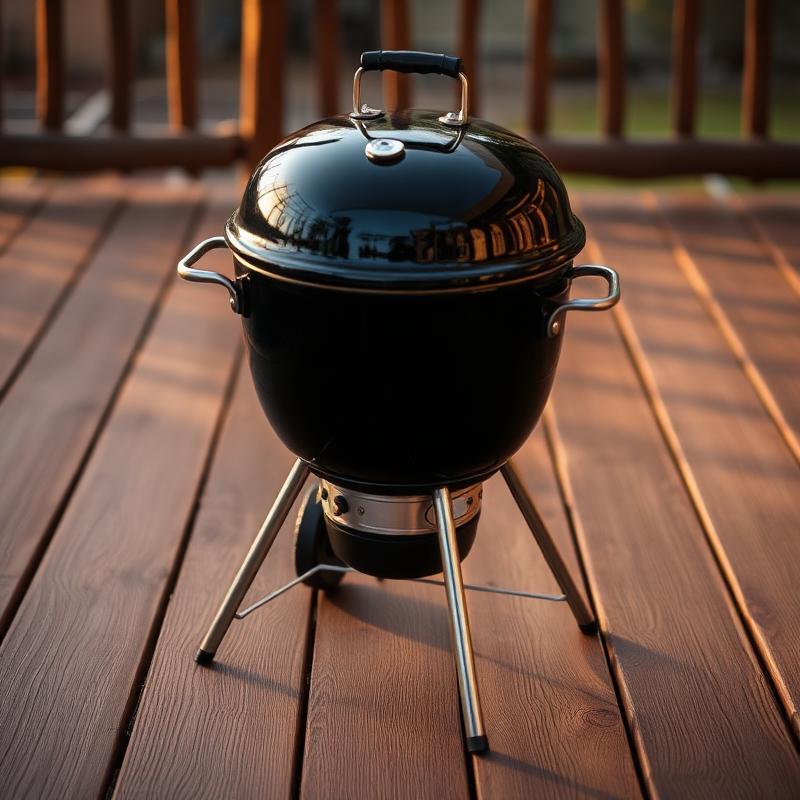
Everdure HUB II Charcoal Grill
Heston Blumenthal's electric-ignition charcoal grill. Lit and ready to cook in 10 minutes — the charcoal grill that finally solves the lighting problem.
ReadHow to Cook a Low-and-Slow Pork Shoulder
The beginner's path to perfect pulled pork — forgiving, affordable, and impossible to mess up.
ReadHow to Replace a Kamado Gasket
Restore the airtight seal that makes your kamado great.
Read