Last Updated
Why Smoking Is Different
Smoking is not grilling turned down low. It's a fundamentally different cooking method that uses indirect heat and wood smoke to slowly transform tough, collagen-rich cuts of meat into tender, flavorful masterpieces.
The magic happens between 200°F and 275°F, where collagen in connective tissue breaks down into gelatin over hours. This is why brisket flat that's chewy at 180°F becomes melt-in-your-mouth tender at 203°F. You can't rush this transformation — it requires time and consistent temperature.
Smoke is the second ingredient. Wood combustion produces hundreds of flavor compounds — phenols, carbonyls, and organic acids — that penetrate meat and create the characteristic bark and smoke ring that define great barbecue.
Choosing Your Smoker
You don't need an expensive smoker to produce great barbecue. A $175 Weber Kettle with a Slow 'N Sear insert ($110) is a legitimate competition-quality setup. A $399 Weber Smokey Mountain has won more competitions than any smoker at any price.
Offset smokers (like the Oklahoma Joe's Highland at $349) produce the best smoke flavor but require constant fire management. They're the most hands-on and demanding option.
Pellet grills (like the Camp Chef Woodwind Pro 24 at $999) offer set-and-forget convenience. Set your temperature digitally and walk away. The smoke flavor is good but more subtle than charcoal or stick-burning.
Kamado grills (Big Green Egg, Kamado Joe) are exceptional smokers thanks to ceramic insulation that holds temperature for hours with minimal fuel.
Vertical smokers (Weber Smokey Mountain) use a water pan to moderate temperature and are the easiest charcoal smokers to learn on.
Pro Tip: Start with the equipment you already own. If you have a Weber Kettle, you can smoke on it today using the snake method or a Slow 'N Sear insert.
The Big Three: Brisket, Ribs, and Pulled Pork
Brisket is the mountain. A full packer brisket (12-16 lbs) takes 12-18 hours at 225°F. The flat and point cook at different rates due to different fat content. The stall — where internal temp plateaus around 150-170°F for hours — tests patience. Most competition cooks wrap in butcher paper at 165°F to push through the stall.
Target internal temp: 203°F, but probe tender is the real indicator. When a thermometer probe slides into the thickest part with zero resistance — like butter — you're done.
Ribs are the gateway drug. Baby back ribs take 5-6 hours at 225°F. St. Louis spare ribs take 6-7 hours. The 3-2-1 method (3 hours smoke, 2 hours wrapped, 1 hour sauced) is a reliable starting point, though many competitive cooks have moved away from wrapping entirely.
Pulled pork is the most forgiving. A bone-in pork butt (8-10 lbs) takes 10-14 hours at 225°F. The high fat content is incredibly forgiving — it's nearly impossible to dry out. Target 205°F internal, then rest for at least an hour before pulling.
Pro Tip: Start with pulled pork. It's cheap ($2-3/lb), forgiving, and produces impressive results even on your first attempt. Save brisket for when you've got 5+ smokes under your belt.
Wood Selection Matters
Different woods produce dramatically different flavor profiles. Here's the real-world breakdown:
Hickory: The classic BBQ wood. Strong, bold, bacon-like flavor. Perfect for pork and ribs. Can be overpowering on delicate meats — use sparingly on chicken.
Oak: The all-rounder. Medium smoke flavor that works with everything. A classic choice for brisket. Burns clean and consistent.
Cherry: Mild, slightly sweet, and adds a beautiful mahogany color to bark. Excellent blended 50/50 with hickory. Particularly well suited to ribs.
Apple: Light, fruity smoke. Perfect for chicken and pork where you want smoke flavor without dominating the meat's natural taste.
Mesquite: The strongest smoke flavor. Burns hot. Excellent for Texas-style beef but overwhelming for pork and chicken. Use chunks, not logs, and limit exposure.
Pecan: Similar to hickory but milder and slightly nutty. Great all-purpose wood if you find hickory too intense.
Pro Tip: Never use softwoods (pine, cedar, spruce) or treated wood. They produce toxic compounds. Stick with hardwood from reputable suppliers.
Temperature Management
Consistent temperature is the single most important factor in smoking. A 25°F swing is acceptable. A 50°F swing will noticeably affect your results.
For charcoal smokers, the Minion Method is essential. Fill your charcoal chamber with unlit briquettes, add 15-20 lit coals on top. The lit coals slowly ignite the unlit ones, providing steady heat for 8-12 hours.
Vent management is your throttle. Bottom vents control airflow in (more air = more heat). Top vent controls airflow out and should almost always stay at least partially open to prevent creosote buildup.
The 'too hot' recovery: If your smoker runs too hot, close the bottom vents to 25% open and leave the top vent at 50%. Temperature will drop over 15-20 minutes. Don't panic and make rapid changes — charcoal responds slowly.
The 'too cold' recovery: Open bottom vents fully. If temperature doesn't recover within 15 minutes, add more lit charcoal. In cold weather, your smoker needs more fuel and tighter vent management.
Pro Tip: Buy a dual-probe thermometer — one probe for meat internal temp, one for grill ambient temp. The lid thermometer on most smokers is inaccurate and positioned too high.
The Stall Explained
Around 150-170°F, your meat's internal temperature will plateau for hours. This is the stall — and it's caused by evaporative cooling. Moisture on the meat's surface evaporates, cooling the meat at the same rate the smoker is heating it.
You have three options:
Wait it out: The purist approach. The stall eventually breaks as the surface dries out. This produces the best bark but adds 2-4 hours to your cook time.
Wrap in butcher paper: The Texas crutch. Wrapping at 165°F traps moisture and pushes through the stall faster. Butcher paper is breathable, so you retain some bark formation. This is what most competition cooks do.
Wrap in foil: The fastest method. Foil is non-breathable, so the meat essentially braises in its own juices. You'll push through the stall quickly but sacrifice bark texture. Good for pulled pork where bark is shredded anyway.
Resting Is Non-Negotiable
After spending 12-16 hours smoking a brisket, the temptation to cut immediately is overwhelming. Don't.
Resting allows carryover cooking to finish and lets juices redistribute throughout the meat. Cut too early and those juices pour out onto the cutting board instead of staying in the meat.
Minimum rest: 1 hour for ribs, 2 hours for brisket and pork butt.
The faux cambro method: Wrap your finished meat in foil, then in old towels, and place in a cooler (no ice). This holds temperature safely for 4-6 hours and continues the tenderization process. Many competition cooks rest brisket for 4+ hours this way.
Target holding temp: above 140°F for food safety. A well-insulated faux cambro will maintain 160°F+ for several hours.
Pro Tip: Cook your brisket the day before and hold it in a faux cambro overnight. Many top competition cooks say their best briskets were cooked a day ahead.
Cold Weather Smoking in Minnesota
Year-round smoking is possible in Minnesota conditions, including days when the ambient temperature is -20°F, with additional fuel and wind protection.
Fuel consumption increases 30-50% in extreme cold. Budget accordingly and have extra charcoal or pellets on hand.
Insulated smokers (kamados, double-walled pellet grills, Weber Smokey Mountain) handle cold far better than thin-walled units.
Wind is a bigger enemy than cold. A welding blanket draped over your smoker (not blocking vents) dramatically improves performance. Purpose-built insulated jackets are available for many popular smokers.
Startup takes longer. Cold-weather reports from Weber Smokey Mountain owners describe substantially longer stabilization times below zero than in summer.
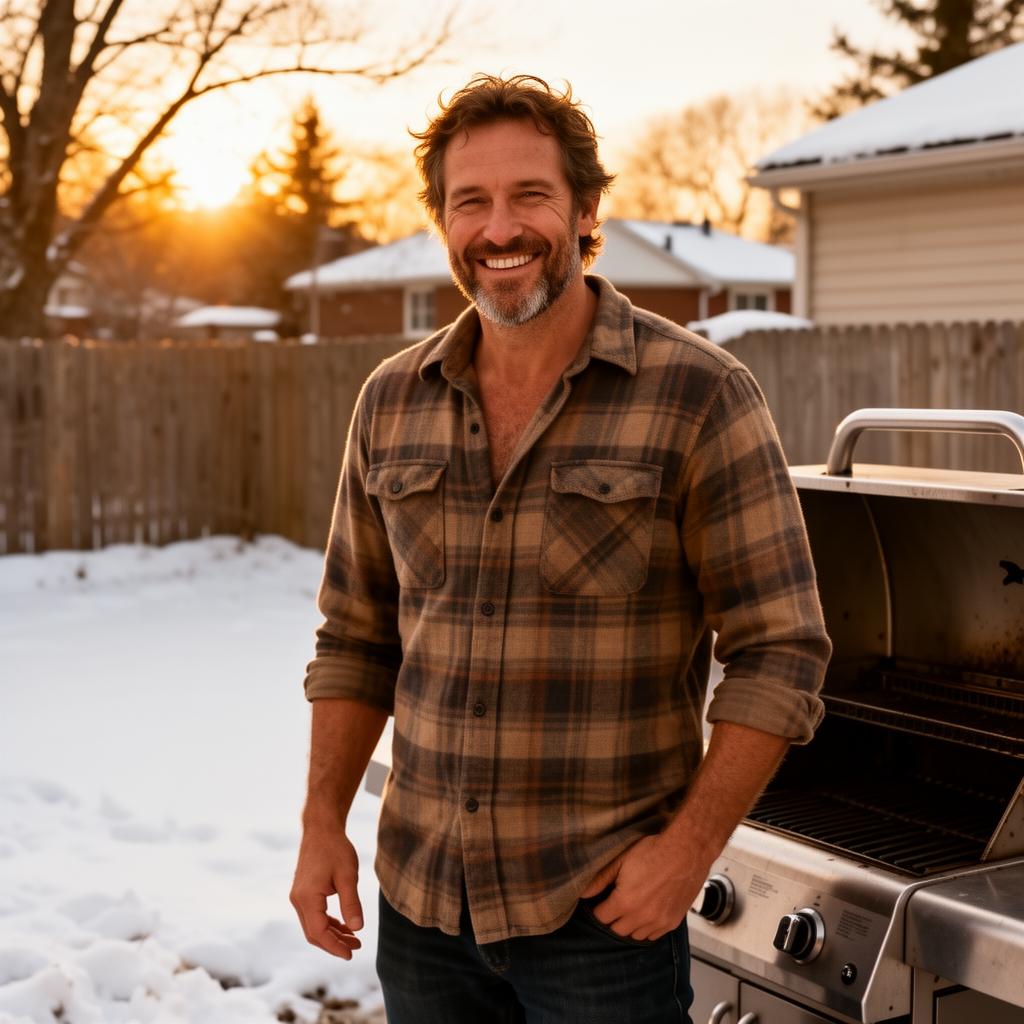
Dress warmly and embrace it. There's something deeply satisfying about producing world-class barbecue while surrounded by snow.
Ready to find your perfect grill?
Browse All Reviews →