Weber Summit Kamado E6

Last Updated
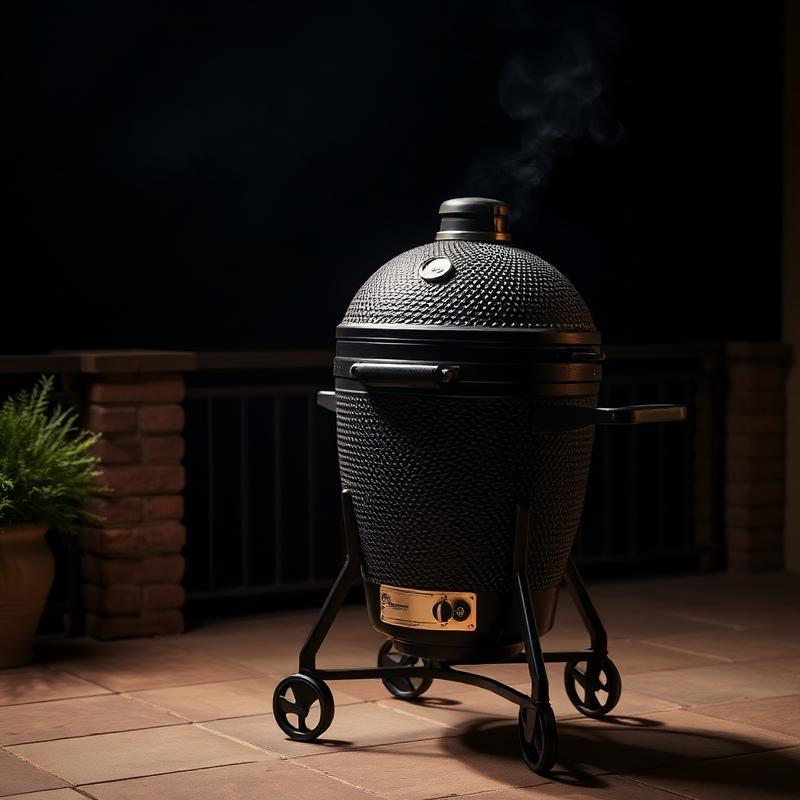
Exactly Which Model This Is
- Manufacturer
- Weber
- Product name
- Summit Kamado E6 Charcoal Grill
- Model number / SKU
- 18201001
- Model generation
- Summit Kamado E6 (current generation — not the earlier Summit Charcoal)
Weber waited a long time to enter the kamado market, and when they finally did with the Summit Kamado E6 they didn't try to out-ceramic Big Green Egg or Kamado Joe — they did something different. The E6 is a steel-bodied insulated kamado with double-wall construction, a porcelain-enameled finish, and the precision air-vent system Weber has been refining on charcoal grills for 70 years. This evaluation is based on Weber's published specifications and owner documentation, the manual's vent and diffuser guidance, and the pattern of long-term owner feedback across retailer and forum reports — so here's where the Summit Kamado justifies its premium price and where it doesn't.
What We Love
- +Air vent system is the most precise on any kamado we have documentation for — detented top wheel plus a fine-adjust bottom slider, and owners consistently report set-and-forget overnight cooks
- +Double-wall porcelain-enameled steel won't crack, chip, or shatter — drop the lid, no problem
- +Hinged Gourmet BBQ System grate accepts pizza stone, wok, sear grate, griddle, and poultry roaster inserts
- +Hinged diffuser plate flips up for direct searing — no more lifting hot stones with welding gloves
- +Built-in lid thermometer plus a dedicated probe grommet, so you are not running wires under the gasket
- +iGrill 3 Bluetooth probe compatibility — proper temp monitoring without a third-party rig
- +Spring-assisted lid hinge holds at any angle and doesn't drop on your knuckles
- +10-year limited warranty backed by Weber customer service that genuinely honors claims
Watch Out For
- −$2,699 is $600-900 more than a Kamado Joe Classic III with comparable cooking performance
- −280 lbs makes it a permanent patio resident — moving it solo is genuinely dangerous
- −Steel shell carries less thermal mass than thick ceramic, which owners report as slightly higher fuel use on very long cooks
- −Aftermarket accessory ecosystem is a fraction of Big Green Egg's
- −Only sold in black — no color options like Kamado Joe
- −Replacement parts ship from Weber rather than being stocked at every BBQ store
Specifications
Cooking Area
452 sq in (main) + 153 sq in (warming rack) = 605 sq in total
Fuel
Lump charcoal (briquettes work but lump is better)
Material
Double-wall porcelain-enameled steel shell
Weight
280 lbs assembled
Temp Range
200°F – 700°F+ (manufacturer specification)
Hopper / Firebox
Stainless steel charcoal grate with ash pan
Warranty
10-year limited on cookbox, 5-year on most other parts
Country of Manufacture
China (Weber-designed, Weber-warrantied)
The Full Review
**Build quality and the steel-vs-ceramic question.** The first thing that separates the Summit Kamado E6 from the category is that it isn't ceramic. Traditional kamados are thick glazed clay that holds heat beautifully and cracks if it is dropped, knocked, or subjected to a hard thermal shock. The Summit is double-wall steel with a porcelain enamel finish. Weber's own materials lean on that difference, and owner reports back it up: the failure mode that shows up repeatedly in ceramic kamado forums — hairline cracks in the dome or base, usually after a freeze-thaw cycle or a dropped lid — is not a failure mode this grill has. The trade-off runs the other way on thermal mass. Ceramic stores more heat than steel, so on extreme-length cooks ceramic kamados generally sip marginally less fuel. We have not run instrumented side-by-side fuel logging on this cooker, so treat the difference as directional rather than quantified.
**The vent system is the headline feature.** Weber redesigned the air vent system for the Summit Kamado rather than adapting the kettle hardware. The top vent is a detented wheel and the bottom is a sliding panel with genuinely fine adjustment, which is the mechanism most reviewers and owners single out as better than Big Green Egg's daisy wheel or Kamado Joe's Kontrol Tower. Combined with a tight gasket seal, the practical result owners describe is the standard insulated-kamado experience: a long stabilization period, then a set temperature that stays put with little intervention. Weber specifies a 200°F to 700°F+ range, so both low-and-slow and searing are inside the design envelope.
**Cooking versatility and the Gourmet BBQ System.** This is where the Summit Kamado pulls genuinely ahead of every other kamado. The main grate has a removable center disc that accepts Weber's full Gourmet BBQ System insert lineup — pizza stone, sear grate, wok, griddle, poultry roaster, dutch oven cradle. The hinged diffuser plate flips up for direct cooking and down for indirect, which means you can sear over open flame and then move to indirect baking without lifting a hot stone with welding gloves. No other kamado offers this level of modular flexibility, and it is the single strongest argument for the price.
**Long-cook performance.** Everything about the design points at unattended long cooks: an insulated double-wall body, a gasketed dome, a deep firebox, and vent hardware with fine control. Owner reports of overnight pork shoulders and full-length brisket cooks without refueling are consistent across sources. Weber does not publish a fuel-consumption figure and we have not logged one, so if exact charcoal burn rate matters to your planning, size your firebox load from your own cooks rather than from a number on a review site.
**High-heat performance and pizza.** With the diffuser up and the vents open, the Summit reaches the top of its specified range, which is well inside Neapolitan pizza territory on the Gourmet BBQ System stone. The dome geometry puts radiant heat over the top of the pizza, which is the reason kamados bake better pizza than a covered kettle. It also handles steakhouse searing without an accessory purchase.
**Cold weather.** In hard-freeze climates the steel body is the argument. It removes the freeze-thaw cracking risk that makes ceramic owners nervous, and a lower-thermal-mass shell generally reaches target temperature sooner than a heavy ceramic one because there is less mass to soak first. Both formats hold well once stabilized — insulation, not material, is what carries a cooker through a deep-winter January. See our [best cold-weather pellet grills guide](/guide/best-cold-weather-pellet-grills) for how insulated kamados compare with pellet cookers in extreme cold.
**Compared to the alternatives.** Against the Big Green Egg Large, the Summit Kamado is more damage-tolerant and more feature-rich but has a much smaller accessory ecosystem — if you want every aftermarket gadget ever made for a kamado, BGE wins on selection. Against the Kamado Joe Classic III, the Summit costs several hundred dollars more for the crack-proof shell, the GBS modular system, and Weber's warranty and parts support. The Kamado Joe answers with the SlōRoller heat diffuser and the Divide & Conquer grate system, both genuinely good. For a deeper breakdown see our [Weber Summit Kamado E6 vs Kamado Joe Classic III comparison](/compare/weber-summit-kamado-vs-kamado-joe-classic).
**What it can't do.** Like every kamado, the Summit struggles with high-volume grilling — 452 sq in of main cooking area is enough for a family of four but tight for a backyard party of 12. The deep dome and tall grate position also make it less natural for direct burger grilling than a Weber Kettle or gas grill. If your primary use case is weeknight burgers and brats, a Weber Spirit gas grill will make you happier than a premium kamado.
How Does It Compare?
At a glance against its closest kamado grill rivals.
| Grill | Rating | Price | Best For |
|---|---|---|---|
| Weber Summit Kamado E6 (this) | 4.7 | $2,699 | Weber's premium kamado entry — thick-walled porcelain enamel, built-in thermometer, and iGrill compatibility. |
| Everdure HUB II Charcoal Grill | 4.6 | $1,799 | Heston Blumenthal's electric-ignition charcoal grill. |
| Kamado Joe Classic III | 4.8 | $1,499 | The biggest competitor to the Egg, arguably better out of the box. |
Who Is It For?
Weber loyalists who want a kamado without leaving the brand and warranty ecosystem they trust. Cooks who value the Gourmet BBQ System modular insert lineup and want one cooker that can sear, smoke, bake pizza, roast a turkey, and cook a wok stir-fry without buying separate equipment. Anyone in a climate with hard freeze-thaw cycles who is genuinely worried about a ceramic kamado cracking. Buyers who want kamado-class performance backed by a 10-year warranty from a company whose customer service is industry-best and who will still be in business in a decade.
Final Verdict
The Weber Summit Kamado E6 is the most thoroughly engineered kamado in the category on paper and in owner reports — the best-regarded vent control, the most cooking versatility through the GBS system, crack-proof construction, and a warranty that genuinely means something. The catch is the price. It sits several hundred dollars above a Kamado Joe Classic III that cooks just as well, and further still above a Big Green Egg Large with a larger accessory ecosystem. For dedicated Weber households or cooks who want a kamado they'll never have to baby, it's the obvious choice and worth the premium. For everyone else, the Kamado Joe Classic III is the smarter buy. Cross-shopping fuel categories before you commit to charcoal? Start with our [pellet grill vs gas grill decision guide](/compare/pellet-grill-vs-gas-grill) and the [gas vs charcoal vs pellet breakdown](/guide/gas-vs-charcoal-vs-pellet) to make sure a kamado is genuinely the right format for how you actually cook.
Check Price on Amazon