Last Updated
Why Buy a Kamado at All?
A kamado is the most versatile single cooker you can buy. The ceramic body holds heat with absurd efficiency — you can sear a steak at 750°F and 20 minutes later be holding 225°F for a 14-hour brisket. Charcoal consumption is roughly 1/3 of an equivalent kettle grill. The same ceramic mass that holds heat also holds moisture, which is why kamado-cooked chicken and pork are noticeably juicier than open-grate equivalents.
The trade-offs: kamados are heavy (150–250+ lbs), expensive compared to a Weber Kettle, and slow to adjust — once you overshoot a temperature, it takes 15–20 minutes to bring it back down. They're also less forgiving on long cooks where you need to peek; every lid opening costs 50°F+ of recovery.
If you want one grill that does everything — searing, smoking, baking pizza, slow roasting — a kamado is the strongest single-cooker answer on the market.
The Four Tiers of Kamado Grills
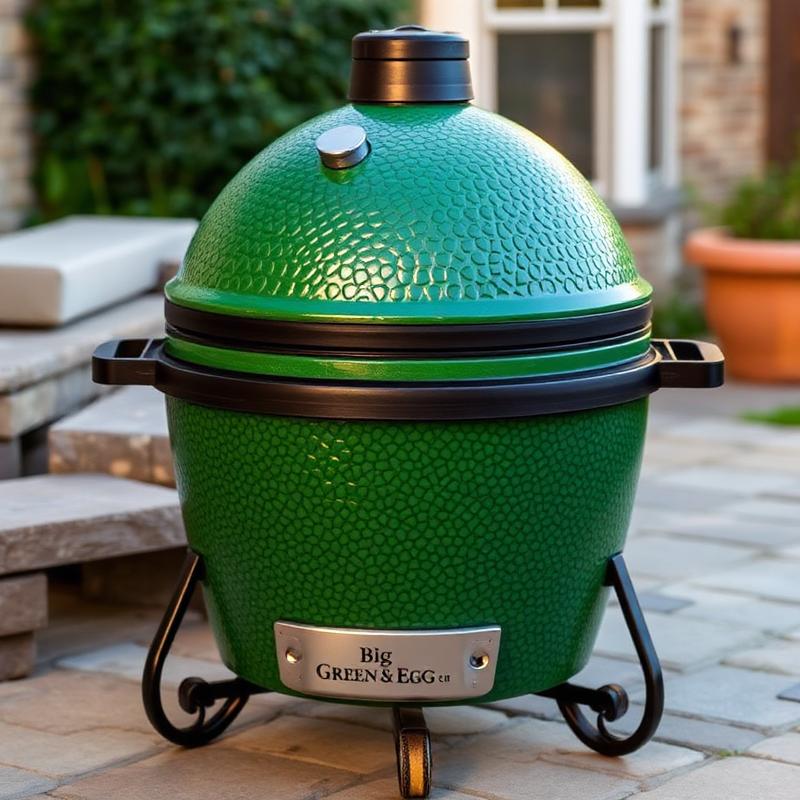
**Tier 1 — Premium ($1,200–$2,500)**: Big Green Egg, Kamado Joe Classic III, Primo Oval. Best ceramics, best hardware, lifetime warranties, accessory ecosystems that span decades. These are buy-it-for-life purchases.
**Tier 2 — Mid-Range ($600–$1,000)**: Vision Grills Classic B-Series, Kamado Joe Classic I, Louisiana Grills K24. Excellent ceramics with slightly less refined hardware. The cooking performance is 95% of Tier 1 at 50% of the price.
**Tier 3 — Budget Ceramic ($350–$600)**: Vision Grills Pro C-Series, Pit Boss K24, Royal Gourmet ceramic kamados. Functional ceramic kamados. Hardware quality drops noticeably — hinges, latches, and gaskets often need replacement within 2–3 years. But the cooking quality is real.
**Tier 4 — Steel 'Kamado-Style' ($300–$500)**: Char-Griller Akorn, Pit Boss K22 Steel. NOT actually ceramic — these are double-walled insulated steel grills that mimic kamado airflow. They cook similarly to ceramic kamados at much lower weight and price, but lose moisture-holding benefits and won't last as long.
For most buyers, Tier 2 is the sweet spot. You're getting 95% of the premium experience without the premium price.
Big Green Egg vs Kamado Joe: The Real Comparison
These two brands dominate the premium tier. They're more similar than the internet fights suggest, but the differences matter.
**Big Green Egg (Large, $1,199)**: The original. 30 years of accessory development means you can build out almost any cook with the EGGcessories ecosystem. Simpler design — no hinge struts, no tool-free heat deflector. Lifetime ceramic warranty. The community is enormous; any question you have has been answered on EGGhead forums.
**Kamado Joe Classic III ($1,799)**: Out-of-the-box more refined. Air Lift hinge means the lid weighs nothing to open. SloRoller hyperbolic smoke chamber improves convection. Divide and Conquer multi-level cooking system is genuinely useful. Cart and side shelves included (BGE charges extra). Lifetime warranty.
**Which to buy**: If you love DIY tinkering and want the deepest accessory ecosystem, BGE. If you want a more refined out-of-the-box experience and don't mind paying $600 more, Kamado Joe Classic III. Both cook identically when dialed in.
Full breakdown: [Big Green Egg vs Kamado Joe](/compare/big-green-egg-vs-kamado-joe).
Best Kamado Under $1,000: Vision Grills Classic B-Series
If you can't justify $1,200+ on a ceramic grill, the Vision Grills Classic B-Series ($649) is the obvious answer. The ceramic body is functionally identical to a Big Green Egg Large — 21" primary cooking surface, 596 sq in cooking area, comparable thermal mass and heat retention.
What you give up at this price: hardware refinement. Hinge feel isn't as tight as a Kamado Joe. The gasket quality is acceptable but will need replacement after 2–3 years (where premium kamado gaskets last 5+). The Lava Stone deflector works but isn't as elegant as ceramic plates.
What you keep: lifetime ceramic warranty, included cart/shelves/ash drawer (premium brands charge $300+ extra for these), 225°F-for-14-hours capability on a single charcoal load, and 750°F+ searing.
For budget-conscious buyers, Vision delivers 90% of the BGE/Kamado Joe experience at 50% of the price.
The Char-Griller Akorn Question
The Char-Griller Akorn ($299) is the most controversial 'kamado.' It's not ceramic — it's double-walled insulated steel — so kamado purists discount it entirely. But it cooks shockingly close to the real thing at a fraction of the weight and price.
**What the Akorn does well**: holds 225°F for 8+ hours on a single load of charcoal, sears at 600°F+, weighs only 90 lbs (ceramic kamados are 150–250+ lbs), and costs less than $300. For renters, deck-grillers, or anyone who needs to move the grill occasionally, it's the only sensible 'kamado-style' option.
**What it gives up**: rust resistance (the steel WILL rust if you don't cover it religiously), moisture retention (ceramic holds humidity better than steel), and longevity (3–5 year practical lifespan vs lifetime for ceramic).
**Buy an Akorn if**: budget is under $400, you need to move the grill, or you want to try kamado-style cooking before committing $1,200+. Just understand it's a different category of product, not a budget BGE.
Essential Accessories (Budget for These)
Whatever kamado you buy, plan to spend an additional $150–$400 on accessories that turn it from 'grill' into 'do-anything cooker':
**Heat deflector / plate setter ($60–$120)**: Required for indirect cooking — smoking, baking, anything below 350°F. Premium kamados include this; budget kamados often don't.
**Ash tool ($15–$25)**: A proper ash rake/scraper makes cleanout 5 minutes instead of 30. Don't try to make a regular fireplace tool work.
**Wireless thermometer ($80–$200)**: Critical for long cooks. A MEATER Plus or ThermoWorks Smoke lets you monitor temp without opening the lid (which costs you 50°F every time on a kamado).
**Pizza stone ($30–$60)**: Kamados make legitimately great pizza at 700°F+. A proper ceramic stone unlocks this capability.
**Replacement gasket ($25–$40)**: You'll need this at year 2–3 on budget kamados, year 5+ on premium ones. Just buy one early so it's ready when the old one starts leaking.
Skip the rotisserie attachment, the half-grate (use the included full grate), and any brand-specific 'system' that locks you into expensive proprietary accessories.
Ready to pick? Start with our [best kamado grills roundup](/best-of/best-kamado-grills).
Ready to find your perfect grill?
Browse All Reviews →