Last Updated

Pellet grill vs gas grill is the single biggest decision most new outdoor cooks face, and the marketing on both sides makes it harder than it needs to be. Gas grill brands sell speed and convenience. Pellet brands sell flavor and set-it-and-forget-it smoking. Both are partly right. Comparing a Weber Spirit E-310 against a Camp Chef Woodwind Pro 24 on published specifications, running costs and cold-climate owner feedback, here's the honest breakdown of which one actually wins, and for whom.
Quick Verdict
Buy a gas grill (Weber Spirit E-310, $449) if your default cook is weeknight burgers, steaks, and chicken breasts and you want food on plates in under 25 minutes. Buy a pellet grill (Camp Chef Woodwind Pro 24, $999) if you want real smoke flavor, weekend low-and-slow cooks like ribs and brisket, and a hands-off experience with an app on your phone. Most serious cooks eventually own both — but if you can only have one, start with gas.
The Contenders
Weber Spirit E-310 (Gas)
$449
Weeknight cooks who want fast, predictable grilling for burgers, steaks, chicken, and veggies with no fuel-management learning curve
Check PriceCamp Chef Woodwind Pro 24 (Pellet)
$999
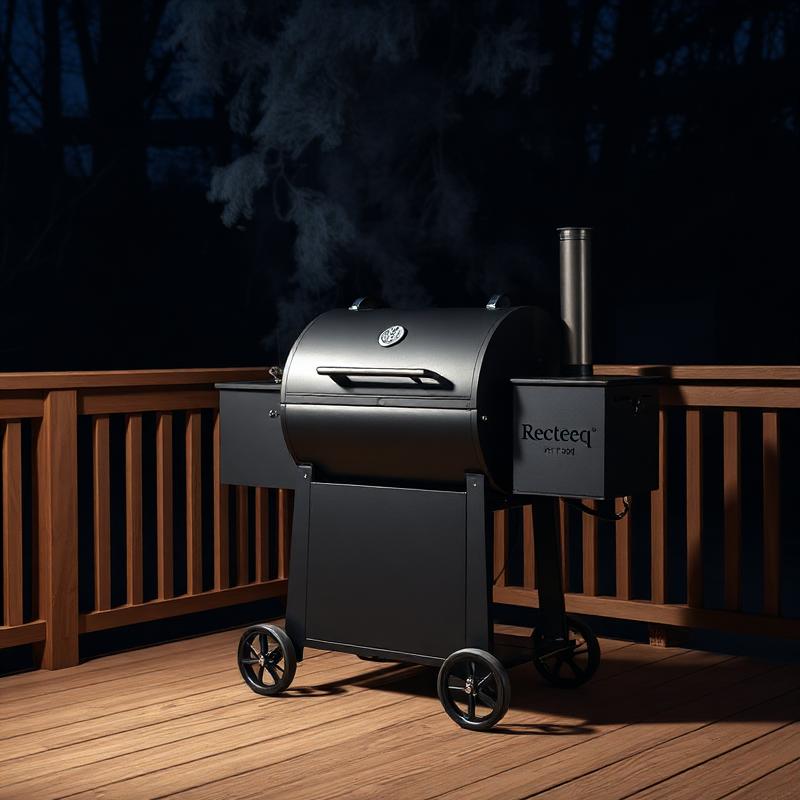
Cooks who want real wood smoke flavor, weekend low-and-slow brisket and ribs, and a set-it-and-forget-it WiFi experience
Check PriceCategory Breakdown
Flavor
Winner: PelletPellet grill wins, but not for the reason most people think. Gas produces excellent grilled flavor — Maillard crust, fat dripping onto burners, the classic backyard taste. What it cannot produce is true wood-smoke flavor: that deep, penetrating smokiness on a 12-hour brisket or a rack of pork ribs. Pellet grills burn real hardwood pellets and deliver authentic smoke at low temperatures (180–225°F) where the smoke ring actually forms. For burgers and steaks the flavor difference is marginal; for low-and-slow barbecue it's enormous.
Speed (Time to First Bite)
Winner: GasGas wins decisively. A gas grill is at 500°F in 8–10 minutes — burgers on the table in 20 minutes, steaks in 18. A pellet grill takes 10–15 minutes to ignite, prime, and reach 450°F, and most pellet grills cap out around 500°F at the grate rather than the 600°F+ a gas grill hits. For weeknight cooks where dinner needs to happen between work and the kids' bedtime, gas is the better tool by a wide margin. Pellet is built for longer cooks, not 30-minute weeknight dinners.
Searing Performance
Winner: GasGas wins. A standard Weber Spirit hits 600°F at the grate with the lid down — enough to put real steakhouse crust on a ribeye. Most pellet grills max out at 450–500°F, which is fine but not steakhouse. The Camp Chef Woodwind Pro and Traeger Timberline have direct-flame or sear-zone features that close the gap, but a dedicated gas grill or a gas grill with a sear station still out-sears every pellet grill on the market. If you cook steaks more than once a week, this category matters.
Low-and-Slow Smoking
Winner: PelletPellet wins in a landslide. Set a pellet grill to 225°F, load the hopper with hickory or cherry pellets, put a brisket on the grate, and walk away for 10 hours. PID temperature control holds within 5–10°F regardless of weather. A gas grill technically can do indirect cooking with a smoke tube, but you're babysitting burner output and adding wood chunks every 30 minutes. For brisket, pork shoulder, ribs, and pulled pork, pellet grills are the right tool — gas is the wrong tool.
Versatility (Range of Foods)
Winner: PelletPellet wins narrowly. A pellet grill cooks everything from 180°F cold smoke (cheese, salmon) to 500°F grilling, plus baking pizza and breads at 425°F. A gas grill covers grilling and indirect roasting well but cannot smoke at true barbecue temperatures. The trade-off is that pellet grills do many things well; gas grills do a smaller range exceptionally well. If you want one cooker that does everything from cold-smoked cheese to a 12-hour brisket to a 450°F pizza, pellet is the more versatile platform.
Convenience & Daily Use
Winner: GasGas wins for weeknight cooking. Open valve, push igniter, cook. Done. Pellet grills require a 10-minute startup cycle, occasional hopper refills mid-cook on long sessions, and routine vacuum-out of ash from the firepot. For a Tuesday-night quick cook, gas is meaningfully easier. Pellet's convenience advantage shows up on long cooks where the app and PID controller let you walk away — different definitions of 'convenient' for different cook types.
Running Cost
Winner: GasGas wins. A 20 lb propane tank ($20-25 refill) lasts 18-20 hours of cooking, working out to about $1.20-$1.40 per hour. A 20 lb bag of quality pellets ($18-25) lasts 15-20 hours and costs roughly the same per hour — until you factor in that pellet grills draw 300 watts of electricity continuously and pellet quality varies wildly (cheap pellets burn fast and dirty). Net difference is small but gas edges out, plus natural gas grills are dramatically cheaper per hour than either. See our [propane vs natural gas grills breakdown](/compare/propane-vs-natural-gas-grills) for the full fuel-cost math.
Weather & Reliability
Winner: GasGas wins. Propane and natural gas burn the same in any weather, with the only caveat being propane vaporization slowing below 0°F. Pellet grills are sensitive to rain (wet pellets in the hopper jam the auger), cold (below 20°F the controller works harder and burns more pellets to hold temp), and wind (which messes with the combustion airflow). For cooks in cold climates or anyone who grills year-round in the rain, gas is the more reliable tool. See our [best cold-weather pellet grills guide](/guide/best-cold-weather-pellet-grills) if pellet is still the right pick.
Learning Curve
Winner: GasGas wins. Anyone can cook competently on a gas grill in their first session. Pellet grills require learning which pellet woods pair with which proteins, how to manage hopper levels on long cooks, when to use smoke mode vs grill mode, and how to read the controller's quirks in cold weather. The pellet learning curve isn't steep, but it exists. Gas is closer to a kitchen stove — turn it on and cook.
Upfront Cost
Winner: GasGas wins at the entry level. A genuinely good gas grill (Weber Spirit E-310) is $449. A genuinely good pellet grill starts around $700 (Pit Boss Pro 850) and the popular mid-tier (Camp Chef Woodwind Pro 24, Traeger Pro 780) lives at $800-1,100. You can buy a great gas grill and a smoke tube for under $500 total; you cannot buy a great pellet grill for that. If budget is tight and you want quality, gas gets you there faster. For budget pellet options, see our [best pellet grills under $1,000](/guide/best-pellet-grills-under-1000) roundup.
Final Verdict
Pellet grill vs gas grill is not really a head-to-head — they're two different tools for two different cooking philosophies. Gas is the right answer for weeknight cooks who want speed, simplicity, and reliable searing on burgers, steaks, and chicken. Pellet is the right answer for cooks who want real wood smoke flavor and weekend low-and-slow barbecue with a hands-off experience. If you cook 80% weeknights and 20% weekends, buy gas. If you dream about brisket and ribs and want the smoke ring photos for Instagram, buy pellet. The best serious-cook setup is one of each — gas for quick, pellet for slow — but if you're starting from zero, gas is the more versatile first grill for the largest range of buyers.
Buying Advice
Three real-world buying scenarios. (1) Brand-new outdoor cook, single grill, no preference: buy the Weber Spirit E-310 — fastest path to confident grilling, lowest learning curve. (2) Experienced griller who already owns a gas grill and wants the next cooker: buy the Camp Chef Woodwind Pro 24 — best pellet value with direct-flame searing, ash cleanout, and Sidekick compatibility. (3) Buying your first and only grill with a hard $700 ceiling: gas wins — a $449 Weber Spirit + $30 smoke tube gets you 80% of pellet flavor on the cooks that matter for $520. For a broader three-way breakdown including charcoal, see our [gas vs charcoal vs pellet guide](/guide/gas-vs-charcoal-vs-pellet).